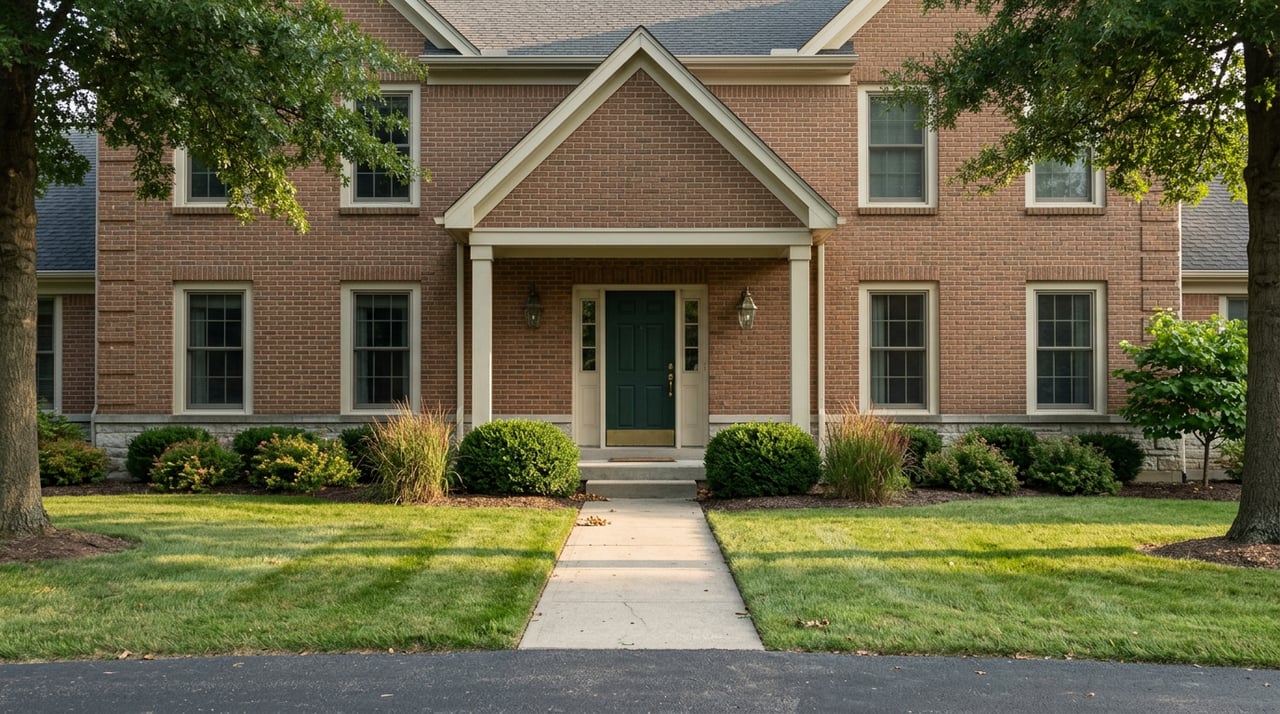
Which home costs more to join the club: the one a builder finished this year, or the one three owners have already lived in?
Inside Dominion Valley Country Club, the answer runs opposite of what most buyers expect. The one-time buy-in to the community's mandatory club membership is smaller for a new Toll Brothers home than it is for a resale, sometimes by a factor of two. That detail rarely shows up in a listing's HOA field, and it is worth understanding before you compare two homes on price alone.
A Membership You Don't Get to Decline
Most country club communities let residents choose whether to join the club next door. Dominion Valley does not work that way. Every household in the community is required to carry at least a Social Membership with Dominion Valley Country Club, whether or not anyone in the house plays golf, swims, or eats a meal in the clubhouse. The requirement sits in the community's governing documents, not in a homeowner's preference.
That baseline membership brings real access: full use of the clubhouse, the pools, and the club's dining rooms. Residents who want more can upgrade to a Fitness Membership, which adds the Sports Pavilion and fitness center, or a Full Golf Membership, which adds play on the Arnold Palmer Signature course. But the social tier itself is not optional. It is priced into owning a home here the same way HOA dues are.
The Buy-In Runs Backward
Here is where the math gets interesting. Buyers who purchase a new home directly from Toll Brothers pay a one-time Capital Funding Fee of $1,250 to establish social membership. Buyers who purchase a resale home, which is what makes up the overwhelming majority of what actually trades in a built-out community like this one, have paid a separate and larger Social Membership Capital Funding Fee documented at $2,500, with at least one 2025 account putting the current one-time contribution closer to $3,500.
| New construction (direct from Toll Brothers) | Resale | |
|---|---|---|
| One-time club capital fee | $1,250 | $2,500 to $3,500 |
| Monthly social membership | Same rate regardless of purchase type | Same rate regardless of purchase type |
Most buyers assume new construction carries the premium and a resale purchase is the value play. Inside Dominion Valley's club structure, the opposite is true for this specific line item. A buyer weighing a five-year-old resale against a new Toll Brothers build should build that fee gap into the offer math from the start, not discover it in the resale disclosure packet three weeks before closing.
This comparison is not hypothetical right now. Toll Brothers added 19 new construction attached homes to the community in 2024 through The Towns Collection, which means buyers today can genuinely choose between a brand new home and a resale inside the same gates, at meaningfully different club buy-in costs.
The Monthly Number Has Moved Three Times This Decade
The one-time fee is not the only figure that has changed. The recurring social membership dues, the check every household writes whether they golf or not, have climbed over time. Community records place the baseline social fee at $59 a month in the early 2010s. Separate accounts from 2023 and again in 2025 put it at $67 a month. Current listing information for the community, updated in July 2026, lists it at $94 a month.
That is close to a 40 percent increase from the $67 figure in just the last couple of years. On its own, $27 a month sounds small. Multiplied across a community built out to roughly 2,467 homes, it reflects a real shift in what club membership costs the typical owner annually, and it is the kind of increase that will not show up if a buyer is working from an older printed fact sheet instead of the club's current fee schedule.
Home Type Changes the Math Too
Dominion Valley mixes detached single-family homes with attached Tournament and Carriage Homes, and HOA dues are not identical across the two. Detached homeowners handle their own lawn care. Attached homeowners pay a monthly fee that folds in lawn mowing, trim maintenance, and seasonal weed control and fertilization, which explains part of the gap between what each home type pays. A small number of homes also sit outside the community's gates rather than inside them, and those have historically carried their own separate detached and attached rates.
None of this makes one home type a better or worse buy on its own. It does mean that comparing two Dominion Valley homes on HOA dues alone, without accounting for whether each is detached or attached, in-gate or out, is comparing two different products carrying the same label.
One Name, Two Separate Ledgers
Anyone researching Dominion Valley online will run across Regency at Dominion Valley, the age-restricted section within the larger community. It is easy to assume the fee structures line up. They do not. Regency operates its own homeowners association, its own gates, and its own club fee schedule, entirely separate from the non-age-restricted side of Dominion Valley covered here. A buyer who pulls up Regency's numbers while researching a detached home on the golf side will be working from the wrong figures entirely.
What This Means for Your Offer This Month
None of this happens in a vacuum. Across Haymarket broadly, the market has stayed fast this summer. Citywide data covering the twelve months ending July 19, 2026 shows the median home sold in 6 days, with closed sales up sharply from the prior year. A market moving that quickly does not leave much room to discover a fee discrepancy after an offer is already in.
Before writing an offer on a Dominion Valley resale, request the current resale disclosure packet from the Dominion Valley Owners Association and confirm the exact capital funding fee and monthly social dues tied to that specific home, not a figure from an older post or a builder's marketing page. The gap between the new-construction fee and the resale fee is real, and it is large enough to change how you compare a Dominion Valley resale against a new Toll Brothers home in the same community, or against a comparable resale in a neighboring Haymarket community with a different club structure altogether.
A Short FAQ
Can I opt out of club membership if I buy in Dominion Valley? No. Every household is required to carry at least the Social Membership tier as a condition of ownership, regardless of whether anyone in the home uses the club's facilities.
Does the capital funding fee apply every time a home resells? Documentation consistently describes it as a fee tied to resale transactions, distinct from the lower fee new-construction buyers pay when purchasing directly from Toll Brothers. Confirm the exact current amount with the Dominion Valley Owners Association before writing an offer, since fee schedules are updated periodically.
Are the fees the same at Regency at Dominion Valley? No. Regency operates its own HOA, gates, and club fee structure, separate from the non-age-restricted side of Dominion Valley discussed here.
Ready to compare a specific Dominion Valley resale against new construction, or against another Haymarket community with a different fee structure entirely? Washington Street Realty can pull the current HOA and club numbers before you write an offer. Schedule a consultation and get the full picture before the fee schedule surprises you at the closing table.
