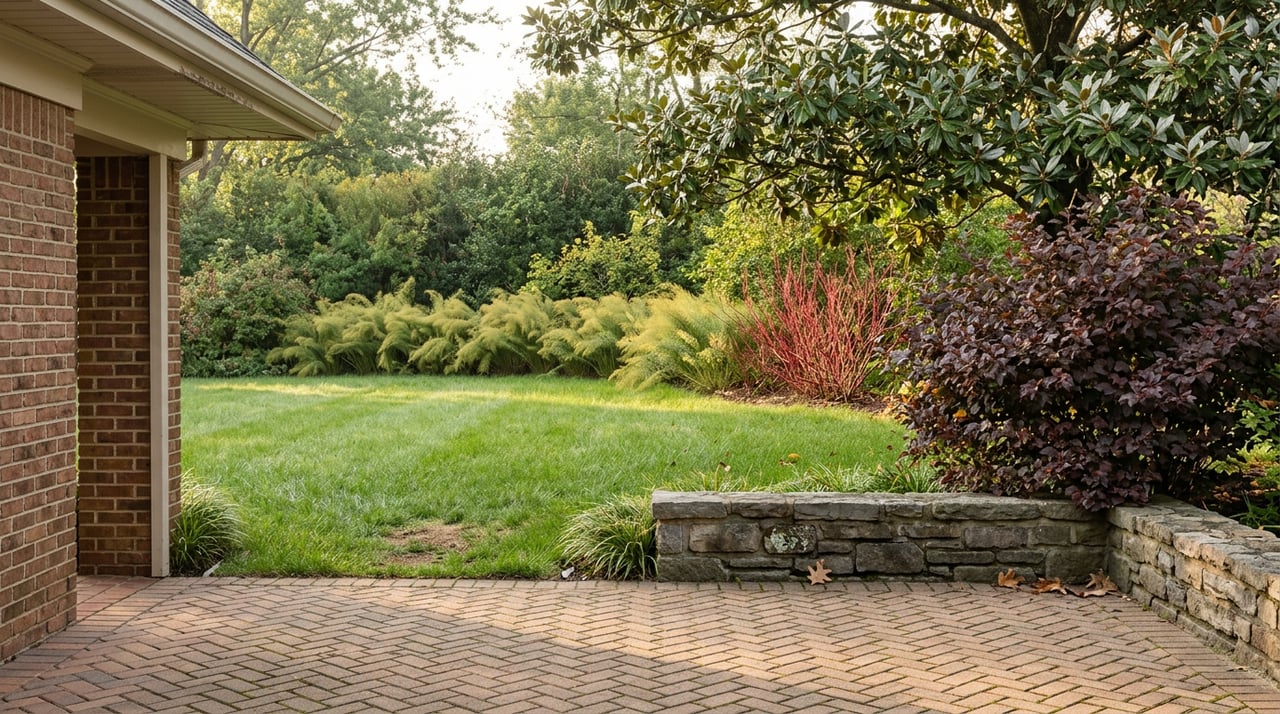
A buyer's home inspector checks whether the roof leaks, whether the HVAC runs, whether the deck is structurally sound. None of that tells you whether the deck was ever supposed to be there in the first place. In Dominion Valley Country Club, a second review runs alongside the one everyone plans for, and it has nothing to do with condition. It checks paperwork against a file, and a well-built, well-maintained addition can fail it just as easily as a shoddy one, because the question isn't whether the work holds up. It's whether anyone ever asked permission to build it.
That distinction matters more than most sellers realize until they're already under contract.
The Review That Runs Before Your Buyer's Does
Dominion Valley's Covenants Committee has to approve most exterior changes before they go in: decks, patios, fences, hot tubs, hardscaping, irrigation systems, even a repainted door or a swapped light fixture. When a home in the community goes under contract, the association does its own exterior walk of the property as part of preparing the resale package. If something was built without that earlier sign-off, it doesn't matter how clean the workmanship is. It shows up as a violation, and the seller has to resolve it before the sale can close.
This is where the timing starts to bite. Dominion Valley's own materials note that once a buyer receives the HOA documents, they get a 72-hour window to review them and raise questions before that contingency drops out of the contract automatically. Three days isn't long to discover a violation notice, understand what it means, and decide whether to still move forward.
The properties most exposed to this aren't the newest ones. Dominion Valley has been building in phases since the early 2000s, and a fair number of today's resale listings carry exterior work that was completed by a previous owner, sometimes a decade or more back, long before the current seller ever took title. A deck built in 2014 by someone who no longer owns the home is still the current seller's problem to fix in 2026.
Fencing Is the Clearest Example, and the Rules Are Specific
Nowhere is the paperwork-versus-condition gap more visible than fencing. Dominion Valley approves exactly two styles:
- A stained wood picket fence in a specific approved shade, with the "Gothic" profile from Barron's Lumber in Manassas named as a supplier that stocks the correct picket
- A black aluminum fence
Beyond style, placement carries its own restriction. Fences are only permitted on non-golf-course lots, unless the homeowner is installing a private pool. Homes with a clear view of the course can't fence at all, aside from invisible fencing for pets. A homeowner who put up a wood fence on a golf-front lot years ago, using a picket style that was never submitted for approval, now owns a violation that has to surface and get resolved before a sale closes, regardless of how good the fence looks today.
Three Clocks, and Only One of Them Is Yours to Start
Once a violation is flagged, three separate timelines start running, and they don't all move at the same pace.
| Clock | What it governs | What it means for a seller |
|---|---|---|
| 14-day resale packet delivery | The association must deliver the resale disclosure packet within 14 days of a written request; the statutory fee is capped at $150 | If records aren't current, the packet itself can be delayed, pushing your whole closing timeline back |
| 3-day buyer cancellation | Under Virginia's Resale Disclosure Act, a buyer can cancel within three days of receiving the packet if it reveals something materially different from what was represented in the contract | A violation the seller didn't know about becomes the buyer's exit ramp the moment the packet lands |
| 45-day ARC "deemed approved" | Under Virginia Code, if the Covenants Committee doesn't act on a completed application within 45 days, the application is automatically approved | This is a floor set by state law that the association's own declaration can't override, but it only starts once you actually submit |
The problem for sellers isn't any single clock. It's the order they run in. If the exterior inspection turns up an unapproved deck after the home is already listed, the seller now needs to file a covenants application and wait out a process that state law caps at 45 days, while the resale packet, once ordered, is already on its own 14-day delivery deadline and will very likely disclose the violation as-is. A buyer who receives a packet flagging an open violation has three days to walk, and 45 days is a long time to ask a buyer to sit still.
A Pre-Listing Checklist Worth Running Before You Call a Photographer
- Pull your own copy of the Covenants Committee approval history for your lot before you list, not after an offer comes in. The Dominion Valley Owners Association outlines what counts as an exterior modification.
- Walk your own exterior with that list in hand: decks, patios, fences, hot tubs, irrigation, paint, and light fixtures all count.
- If you find something that was never approved, file the application before you list, not after. Starting the 45-day clock early gives you room if the review takes the full window.
- Order your resale documents early through the association's process, so the 14-day delivery window isn't competing with your closing date.
- If a violation is unavoidable before closing, address it directly with your listing agent so it's disclosed on your terms rather than discovered on the buyer's.
A Short FAQ
Does the 45-day clock start when I list my home, or when I submit an application? It starts when a completed application reaches the Covenants Committee, not when your home goes live on the market. A seller who waits until after listing to discover an unapproved addition is starting that clock later than they'd like.
What if the unapproved work was done by a previous owner, not me? The violation still attaches to the property, not the person who built it. Virginia's disclosure rules require it to be noted in the resale certificate regardless of who did the work, and it still has to be resolved before the sale can close cleanly.
Can I put a privacy fence around a pool on a golf-course lot? Dominion Valley's rules carve out an exception for private pools even on golf-course lots, where fencing is otherwise restricted to invisible pet fencing. Any pool fence still needs to go through the Covenants Committee before it goes in the ground.
Selling in Dominion Valley Country Club rewards the seller who treats the paperwork like part of the property, not an afterthought to it. The homes that close on schedule are usually the ones where someone checked the approval file months before the first showing, not the week the offer came in.
If you're weighing a sale in Dominion Valley Country Club and want a clear read on what your specific lot's approval history looks like before you list, the team at Washington Street Realty can walk it with you. Schedule a consultation and let's find out what's in your file before a buyer does.
